NCCS is now Cancer Nation. Find out more about our next chapter. Join Us
Survivor Stories
Desirée
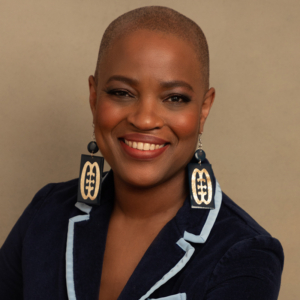 At the age of 38, Desirée A. H. Walker was diagnosed with breast cancer, which recurred at age 47. For many who have had to fight breast cancer, Desirée serves as an advocate for patients by openly speaking about her diagnoses to audiences nationally and internationally. The core of her message is to encourage patients to truly know their body and feel empowered to steward self, mind, body and soul.
Extremely active in the cancer community, Desirée, through SHARE’s Side by Side Program, trains medical students and doctors on how to deliver disappointing news and passionately supports the importance of patient-doctor communication. She volunteers with the Young Survival Coalition as President, Board of Directors. She is a member of the National Coalition for Cancer Survivorship’s Cancer Policy Advocacy Team inaugural Steering Committee, the NCI’s Cancer Prevention and Control Central Institutional Review Board; the NCI SWOG Recruitment and Retention and Patient Advocate Committees in addition to Diversity, Inclusion, Belonging Strategic Work Group. Desirée is also a member of the Society for Integrative Oncology Patient Advocate and Research Committees in addition to the Health Equity, Inclusion & Belonging Task Force. Desirée is a former member of the CDC’s Advisory Council on Breast Cancer in Young Women.
Desirée has given countless talks, including “Spirituality and Cancer” at CancerCare’s Living with Cancer conference and the Canadian Association for Psychosocial Oncology annual conference. She has served as a panelist and has provided a patient advocate perspective at AACR’s Addressing Advocacy at the Bench: COVID-19 Vaccines: Patient Advocates as Trusted Sources of Information, NCCS’ annual CPAT, SXSW’s International Women’s Day event, the FDA/OCE Educational Series – Conversations in Cancer, MSK’s National Minority Cancer Awareness events, AAADV Annual Meeting, The Cornell Center for Health Equity’s Tri-Institutional Symposium on Health Equity, the 12th and 13th AACR Conference on the Science of Cancer Health Disparities and the FDA’s session “Building and Inclusive Cancer Community” at AACR Annual Meeting. Desirée has been a guest blogger for WebMD, ASCO’s Cancer.Net and the Department of Defense’s Breast Cancer Research Program.
Desirée has appeared in the media on numerous occasions including “The Breakfast Club” with DJ Envy, Angela Yee and Charlamagne Tha God. She is featured in Conquer Cancer Foundation’s Your Stories mini-podcast, Susan G. Komen’s “Know Your Girls” campaign, the Ralph Lauren 20th and 21st Anniversary Pink Pony campaign and The Conduit’s podcast: “Don’t Forget About Love”. Desirée facilitates support groups for women of African descent who were diagnosed with either breast or ovarian cancer.
She is a graduate of the National Breast Cancer Coalition’s Project LEAD® and AACR S-SP program. As a patient advocate, she’s attended the AACR Annual Mtg. and the Science of Cancer Health Disparities in Racial/Ethnic Minorities and the Medically Underserved conferences and numerous other national and international conferences. Desirée has been a reviewer for the DoD’s CDMRP, PCORI, Cornell Center for Health Equity and the Conquer Cancer Foundation. As a patient advocate, she brings her experience to a team of cancer researchers at Columbia University’s Mailman School of Public Health, the University of Wisconsin-Madison and Memorial Sloan-Kettering Cancer Center.
Desirée’s diagnoses motivated her to become a patient advocate to share her talents and aid diverse communities. She uses her platform to be a voice for the voiceless and pay forward by educating and empowering people around the world.
Skyler
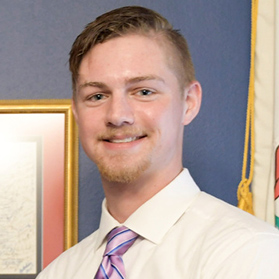 Skyler Taylor’s cancer journey was a lesson in self-advocacy. Despite being told by his primary care doctor that an abnormality was of no concern, Skyler, a sophomore in college and aspiring physician, knew it was alarming. He later discussed his discovery with another doctor, which led to a testicular cancer diagnosis that eventually metastasized to his lungs.
Skyler asked specific questions at doctors’ visits, having researched the survival rate, treatment options and developing an understanding of what he would eventually endure. It was daunting, but he knew that testicular cancer is highly curable in young patients and felt prepared to undergo treatment while finishing college. Cancer was merely an obstacle for him to overcome.
After receiving his treatment plan, Skyler felt comfortable telling his entire family about his diagnosis. His parents, siblings, grandparents, then-girlfriend, who is now his wife, and her parents visited him during chemotherapy. Skyler shadowed his surgical urologist and oncologist, each of whom helped guide him toward medical school. Today, Skyler is studying internal medicine with plans to go into oncology.
When Skyler completed treatment, he knew advocacy would make his hope of impacting patients’ lives beyond medicine a reality. He got involved with NCCS while searching for volunteer opportunities in the cancer community. Skyler appreciates NCCS’s unique focus on care after and between treatments, unlike many other organizations. In 2019, he attended NCCS’s Cancer Policy and Advocacy Team (CPAT) symposium in Washington D.C. There, he received advocacy training before speaking with his representative and senators on Capitol Hill about cancer survivorship legislation. Skyler also used advocacy skills while meeting with local elected officials in Springfield, Illinois. “It feels good to impact so many people and to advocate for these changes,” he said.
Skyler savors each moment and each day for what they are. His cancer diagnosis motivated him to have a better outlook on life, inspired him always to find something to be happy about, and helped him realize that not everything is guaranteed to have a desirable outcome. Most importantly, he learned the value of advocacy. “If you can’t advocate for yourself, it’s beneficial to have a family member or close friend who can during doctors’ visits and time in the hospital,” he said.
Skyler Taylor is studying to be a doctor @siusom after surviving testicular cancer. He is considering pediatrics and we discussed my bill to fund #childhoodcancer research. Skyler, thank you for coming in and I hope your family had a great time on their tour. pic.twitter.com/5h45pwUN2I
— Hon. Rodney Davis (@RodneyDavis) September 10, 2019
Erin
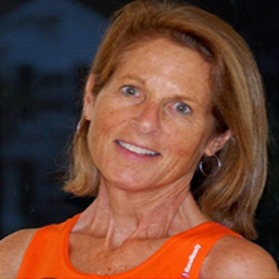 Cancer Nation is deeply saddened to share the passing of Erin Cummings on February 24, 2026. She was a passionate advocate for cancer survivors, 2019 Cancer Nation Ambassador and the founder of Hodgkin’s International. Diagnosed with Hodgkin lymphoma at a young age, Erin dedicated her life to supporting others navigating similar experiences, creating a global community that connected patients, survivors, and caregivers with trusted information and each other. Erin believed that no one should face cancer alone. Through Hodgkin’s International, she worked to improve access to education, foster peer support, and elevate the voices of survivors worldwide. Her advocacy was grounded in compassion, connection, and a commitment to ensuring that every person impacted by cancer felt seen and supported. We honor Erin’s legacy by continuing to champion community building, sharing knowledge, and advocating for better care for people living with, through, and beyond cancer.
Loretta
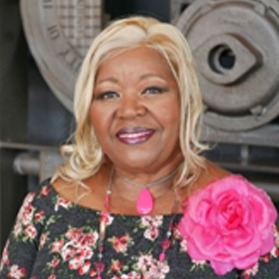
Everything that happens to us is not for us to keep. It’s for us to figure out a way to give back. We must figure out a way to help other people. How do I take this hurt, pain, and discomfort and channel it in a way to help others?
When Loretta Herring’s mother was diagnosed with lung cancer in 1996, she and her four sisters asked themselves, “How do we deal with our mom being sick with a disease that blindsided us?” They felt lost and overwhelmed by their mother’s weight loss, hair loss, and the fact that she was constantly sick. They needed answers, but there were none; they needed support, but there weren’t many groups for Black patients. Loretta and her sisters’ belief that no one should have to go through cancer alone inspired them to launch the Cancer Awareness Network for Children in 1997, a nonprofit organization geared toward eliminating the fears associated with a cancer diagnosis through free, quarterly workshops and luncheons.
Loretta’s ability to encourage others throughout cancer diagnoses was put to the test when a routine mammogram led to a stage zero breast cancer diagnosis in 2010. She felt devastated and afraid. She recalled losing her mother and cousin only two years after their diagnoses. For her, cancer meant one thing: death. But with the immense support of her sisters and friends, the strength she drew from the tenacity of other cancer survivors, and – most importantly – her faith, Loretta realized that she needed to channel her hurt, pain, and discomfort in a way to help others. The fight was on, and she was determined to win!
Through her work with the Department of Defense, Loretta served for six years as a Consumer Peer Reviewer for breast cancer research under the University of Alabama at Birmingham, which led to her involvement in cancer organizations – including NCCS. While Loretta is grateful for all she’s accomplished as an advocate, she’s most grateful for NCCS. What sets this organization apart from others is the staff who truly care about survivors and their communities. “I haven’t seen this support on a local level anywhere else,” Loretta said. “Once you go home, NCCS will reach out to ask what you’re doing and how they can help.” NCCS connects advocates and ambassadors with other organizations, while building upon the work they’re already doing. When NCCS asked Loretta to serve as an Elevate Ambassador, she took her knowledge and training to give back to her community.
With data provided by NCCS, Loretta set out to develop the Telehealth Service Program, whose mission is to bridge the gap between elderly cancer patients and technology. The COVID-19 pandemic highlighted the need for electronic communications to participate in virtual meetings, doctors’ visits, and conversations with family. Unfortunately, many senior cancer patients in Loretta’s community, Birmingham, AL, either didn’t know how to use technology or didn’t own a computer or tablet. She decided to address this and conduct step-by-step, in-home trainings on equipment to increase their knowledge of telehealth services and build their confidence in the virtual world.
Loretta didn’t know where this journey would take her when she began advocating for her mother 24 years ago – but thanks to her own diagnosis, the world opened before her eyes. Hearing those dreaded words, “You have cancer,” gave her the opportunity to learn the full impact of advocacy, research, and fundraising. Loretta’s mission is to give back to members of her community by sharing her insights as a survivor, empowering others, and building a better future for all cancer patients!
Doris
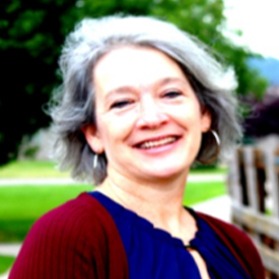 Doris received a life-changing diagnosis of inflammatory breast cancer in 2007. She became very involved with shaping the concept of survivorship care at the center where she received treatment and co-founded its mentorship program. She also created community events to educate, encourage, and empower people with cancer.
When she moved from the East Coast to rural South Dakota, she asked the local cancer care center what resources they had for survivorship care and they said, “Relay for Life.” She then took everything she learned about quality cancer care to become her local center’s first-ever Survivorship Community Outreach Liaison.
She is a 2019 NCCS Elevate Ambassador alumnus and was also invited to serve on the highly-esteemed steering committee for the South Dakota Comprehensive Cancer Coalition.
Aside from being a powerful advocate, public speaker (check out her TEDx talk, “Cancer Survivorship: Finding a New Normal”), blogger, educator and encourager on issues facing cancer survivors, Doris is a wife, mother, empty-nester, survivor of life, and coffee lover. She co-manages a local health food store—where she hosts survivorship workshops, of course.
Randy
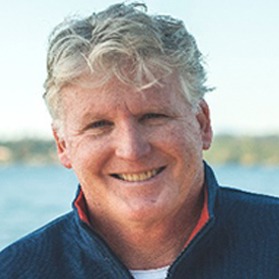 Randall “Randy” Broad was diagnosed with Stage III non-small cell lung cancer NSCLC) in 2008. Following his “deemed inoperable” surgery, the surgeon prognosed a shortened future and said, “You best get your things in order.” With this directive, Randy set about “re-ordering” his life by re-prioritizing his values.
With a shortened warranty given on the front end, the cancer journey led Randy to chronicle key learnings. The original goal, to provide his kids a reference to some of life’s more cherished and meaningful experiences, became an Amazon bestseller, It’s an Extraordinary Life – Don’t Miss It.
The book has since opened the door to the world of professional speaking and full-time health care advocacy. Randy’s takeaway from this experience was to realize how much people engage by listening to stories—real life stories that touch on the fabric of life.
Randy also created and produces the podcast C-Sessions. The premise of the program is to improve communication on both sides of the stethoscope to improve cancer patient outcomes. Available on your favorite podcast listening network.
Randy has been an NCCS CPAT member since 2016. In 2018, he represented NCCS at a press conference on the importance of the Affordable Care Act, hosted by House Speaker Nancy Pelosi’s office.
Xenia
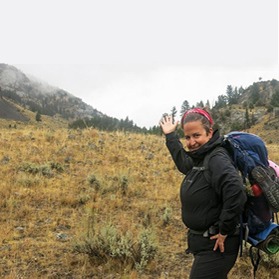 Xenia doesn’t hold back when she refers to her cancer as a traumatic experience. She was diagnosed with endometrial cancer at 31 and underwent treatment for a year, which included high doses of steroids. After almost two years of remission, Xenia’s cancer returned and had begun to spread to her uterus. With her oncologist’s recommendation, Xenia underwent a radical hysterctemy at age 34.
“No google searches or consultations with an oncologist or nurse practitioner can prepare a young woman for what her body will experience during the months that follow,” says Xenia.
Xenia felt out of control. She did not know how to would react emotionally and felt like a stranger in her own skin. Nothing made sense to her and life did not return to normal – everything fell apart and she hit rock bottom.
Two years after Xenia’s surgery she found a running group that connected other cancer warriors called, “Cancer to 5k.” Not only did Xenia take part in the training, she also participated in a program where survivors could walk/run/commute from Baltimore, MD to Key West, FL and visit various cancer centers along the way. During the journey, Xenia met lifelong friends. They were supportive of Xenia, cried when she cried, and laughed at all the idiosyncrasies that can occur during cancer treatment. Most importantly, they understood her.
When Xenia completed her goal race, friends began asking her when the next one would be. Thus, one 5K turned into a 15K. Then came the ultimate “Why not?”—the chance to run the NYC Marathon. She accepted the challenge and accomplished the marathon.
“No one knows how everything will turn out. All I can control is my training schedule and frame of mind. I conquered cancer—what’s 26.3 miles?” – Xenia
Xenia believes in finding an activity that makes survivors rediscover the parts of their bodies that cancer silenced. Xenia is her district’s legislative representative for the American Cancer Society Cancer Action Network and is an active volunteer with the Ulman Foundation based in Baltimore. Xenia is also a 2019 NCCS Elevate Ambassador alumnus.
In addition to advocacy, Xenia is a practicing art therapist in New York City and co-hosts a mental health-focused podcast, “Firefly and Phoenix.” She finished her first marathon—the New York City Marathon—in November, and is training for her second, while also managing her dog’s Instagram account @rupert_to_the_rescue.
Wenora
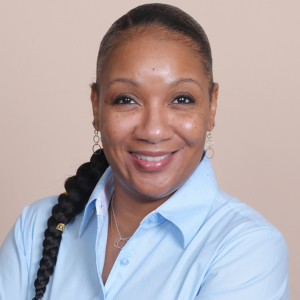 Wenora Johnson is a three-time cancer survivor and Lynch Syndrome patient. She is an enthusiastic advocate who works with many organizations to promote policy and research around cancer.
Wenora served as a consumer reviewer, nominated by NCCS, in the Congressionally Directed Medical Research Programs’ (CDMRP), Peer Reviewed Cancer Research Program (PRCRP). As a consumer reviewer, she was a full voting member (along with prominent scientists) at meetings to help determine how the $90 million appropriated by Congress for Fiscal Year 2019 will be spent on cancer research.
“As a Cancer Survivor and Patient Advocate, it was one of the most rewarding experiences I’ve participated in, especially knowing my participation will have a positive effect on the future and advancement of cancer research.” – Wenora
Consumer reviewers like Wenora represent the collective view of patients by preparing comments on the impact of the research on issues such as diagnosis, treatment, and quality of life.
She is a PCORI (Patient-Centered Outcomes Research Institute) Ambassador and Peer Reviewer, and she was recently selected as a member of the National Quality Forum’s Cancer Standing Committee.
As a Lynch Syndrome patient, Wenora also advocates for genetic testing and awareness. She serves on various panels and review boards to provide extensive feedback on her role as a patient and research advocate with organizations such as CAP (College of American Pathologist); Clinical Trials Curator for Fight CRC; FORCE (Facing Our Risk of Cancer Empowered) Volunteer and Board Member; a Consumer Reviewer for the DoD Peer Reviewed Cancer Research Program; a PCORI Ambassador and Clinical Trials Panel Member; CPAT Member for the National Coalition for Cancer Survivorship (NCCS); CMS TEP Panel Member to review Medicare/Medicaid guidelines; NRG Oncology Patient Advocate Committee Member and the AACR Scientist~Survivor Program – presenting a poster on financial toxicities and disparities among minority patients and a National Quality Forum (NQF) Cancer Standing Committee Member. She has written patient advocate blogs and participated as a guest speaker/panelist.
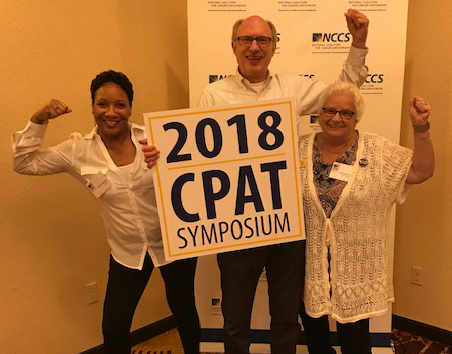
Wenora with other CPAT Members at the 2018 NCCS CPAT Symposium.
Hillary
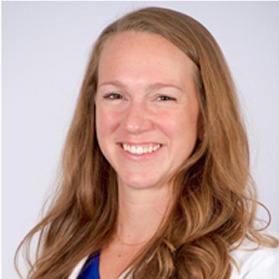 The first time Hillary’s best friend Katie heard “you have cancer,” she was sitting in the doctor’s office with her. They were both 28 years old. Hillary collapsed, weeping in anticipation of what they were about to embark on.
Hillary studied breast cancer extensively while she earned her PhD and served as a postdoctoral fellow. As a research scientist, she thought her years of education and focus on breast cancer would prepare her for Katie’s diagnosis. Instead, she felt completely lost.
Hillary was amazed at how little she had learned about how cancer affects the person as a whole during her years of training. She could tell you how Katie’s HER2 protein makes cells grow and divide, but she didn’t know the side effects of the therapies that blocked this process or the normal course of treatment.
“I noticed that working with advocates was transforming my research, and ultimately my career, as I began to factor in the human aspect of cancer into my research. More importantly, I realized that I was one of a few research scientists engaging in this kind of patient-based work.” –
Over time, Katie’s treatments came to an end, but Hillary continued working with patient advocates online and in person. More importantly, she realized that she was one of a few research scientists engaging in this kind of patient-based work. This led Hillary to explore more ways to improve relationships between patient advocates and researchers.
“My hope is that many more research scientists, and not just those who hear the words ‘you have cancer’ will engage with cancer advocates early and often, recognize the value of these relationships, and incorporate that knowledge into their research.” – Hillary Stires, PhD
Not everyone confronts cancer as closely as Hillary’s best friend, but she is grateful for the catalyst it was in her life and work to help facilitate more relationships between patient advocates and research scientists to improve cancer research.
Hillary is a 2019 NCCS Elevate Ambassador alumnus and presented a TEDx talk on the value of science communication.
Richard and Lynne
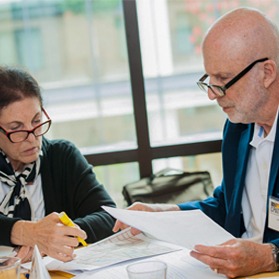 Richard wasn’t expecting to meet someone as special as Lynne in his hospice bereavement group. His wife of 36 years passed away, and little did he know, so had Lynne’s husband of 36 years. Richard and Lynne share other things in common, such as cancer survivorship, their love for traveling, and their love for one another.
Richard is a cancer survivor and widower who is especially fortunate to have Lynne alongside his cancer journey. Together, Richard and Lynne attend health appointments, give each other emotional support, advocate for quality cancer care on Capitol Hill, and face life’s challenges and joys with love and loyalty.
“I love his ability to share his past openly and honestly, making me feel a part of it. His devotion to advocacy for cancer survivorship is encouraging and motivating for me. He is ethical, genuine, and loyal. Most importantly, I love that Richard is my friend, my companion, my supporter, my pal. He has given me the opportunity to love again, love life again, and be grateful for the future while still remembering the past.”
– Lynne, Caregiver, NCCS Advocate
“Lynne is my companion and soulmate. She has my best interests at heart and I can depend on her to always be there for me! She is my compass — there to remind me that it is always the right time to do the right thing and to strive to be the best person that I can be. What I love most about Lynne is our indescribable bond.”
– Richard, Cancer Survivor, NCCS Advocate
Virgie and Martin
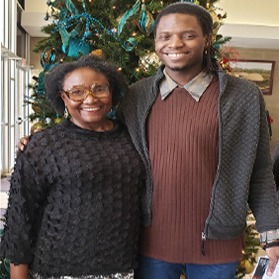 Virgie discovered her son’s cancer had recurred and had a 10% survival rate, over the phone. A modest and graceful woman, she found this life-altering, informal exchange to be one of the hardest moments of her son’s cancer journey. Although her son Martin, and the rest of the world, would never know anything bothered Virgie, including his cancer journey, she gave her son relentless faith, encouragement, hope, and fuel that he wore firmly during treatments. These traits were especially needed when they discovered Martin had a recurrence, following his initial remission.
Just like mother and son, Martin’s cancer was relentless. It exhausted Virgie to think about the time, energy, and worry this diagnosis required. It’s one of the reasons Martin and Virgie flew to a gaming conference in Las Vegas, by donation, prior to the beginning of his treatments. Cancer may demand a lot
– but joy and memories aren’t always it.
Intelligent and optimistic, Martin shared his experience at NCCS’ annual CPAT symposium while Virgie smiled with pride. The entire room of cancer survivors and advocates felt his joy, optimism, and strength. Virgie and Martin planted seeds of inspiration by making a crowd with heavy burdens feel lighter.
Virgie and Martin believe in the importance of community – which is why they advocate.
Heidi
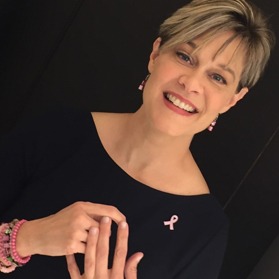 Over 15 years ago, Heidi was advised by countless doctors to terminate her pregnancy when she was diagnosed with breast cancer. She would not allow the diagnosis, which took her mother’s life, to also seal the fate of her unborn baby boy. That is why she packed up her family every weekend to stay in another state’s hotel for treatments with a doctor that gave her and her baby the chance to live.
Heidi’s teenage daughter, Catie, remembers those days on the road vividly. The memories of her mom fighting for her life, and her brother’s, shaped who she is now. Bright and courageous, Catie researches the lawmakers who advocate for quality cancer care and refers to her local officials with ownership, saying, “my representative.” She knows who the lawmakers are, what they stand for, and even better — she knows what she stands for.
Catie accompanied Heidi to NCCS’ Cancer Policy and Advocacy Team (CPAT) annual symposium and found her own voice as an advocate. It was no surprise that when she was stopped in the halls of Capitol Hill by countless lawmakers, or when she was randomly chosen from a large crowd to stand on stage next to Speaker Pelosi, she faced it with fearless enthusiasm. Now, a memory and keepsake for Heidi, NCCS, and you. Catie has now joined Heidi three times to lobby lawmakers on behalf of cancer survivors.
The future is full of hope, which is Heidi, alongside her family, advocating for a better one.
Link to: Share Your Survivor Story
Share Your Survivor Story
Join the national cancer survivorship movement. Your voice matters.